
(Part One: AWGN Model)
A useful example of MAP estimation was NASA’s 1997 US patent, pertaining to the invention of a MAP decoder for digital communications. MAP decoding is a probabilistic decoding method that selects the most likely transmitted sequence given the received sequence and the channel’s statistical properties. It is fundamental in the field of communications, especially in the context of error-correcting codes. Typically a received signal can be described as follows:

where 


However, let’s first consider the simplest example of MAP decoding, i.e. decoding transmitted signals, assuming the primary source of error in a communication system is due to 
Given a received sequence ![r = (r[1], r[2], ..., r[k])](https://s0.wp.com/latex.php?latex=r+%3D+%28r%5B1%5D%2C+r%5B2%5D%2C+...%2C+r%5Bk%5D%29&bg=ffffff&fg=242424&s=0&c=20201002)

![x = (x[1], x[2], ..., x[k])](https://s0.wp.com/latex.php?latex=x+%3D+%28x%5B1%5D%2C+x%5B2%5D%2C+...%2C+x%5Bk%5D%29&bg=ffffff&fg=242424&s=0&c=20201002)

In the case of BPSK modulation, ![x[i] \in \{+1, -1\}](https://s0.wp.com/latex.php?latex=x%5Bi%5D+%5Cin+%5C%7B%2B1%2C+-1%5C%7D&bg=ffffff&fg=242424&s=0&c=20201002)

![r[i] = x[i] + w[i]](https://s0.wp.com/latex.php?latex=r%5Bi%5D+%3D+x%5Bi%5D+%2B+w%5Bi%5D&bg=ffffff&fg=242424&s=0&c=20201002)
![w[i]](https://s0.wp.com/latex.php?latex=w%5Bi%5D&bg=ffffff&fg=242424&s=0&c=20201002)


In certain systems where some sequences are more probable than others, the prior distribution 
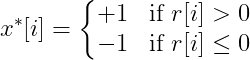
In summary, MAP decoder aims to find the most probable transmitted sequence given a received sequence, leveraging knowledge about the channel and, potentially, the statistics of the transmitted sequence. In the context of an AWGN channel with BPSK modulation, MAP decoding boils down to a simple thresholding operation on the received symbols. However, when channel coding is applied (e.g., convolutional or turbo codes), the MAP decoding process becomes more involved, often relying on algorithms like the BCJR algorithm to compute the a posteriori probabilities effectively.
 BGecko